Artifactory
Review of Artifactory Software: system overview, features, price and cost information. Get free demos and compare to similar programs.
Overview
About Artifactory
Artifactory Screenshots
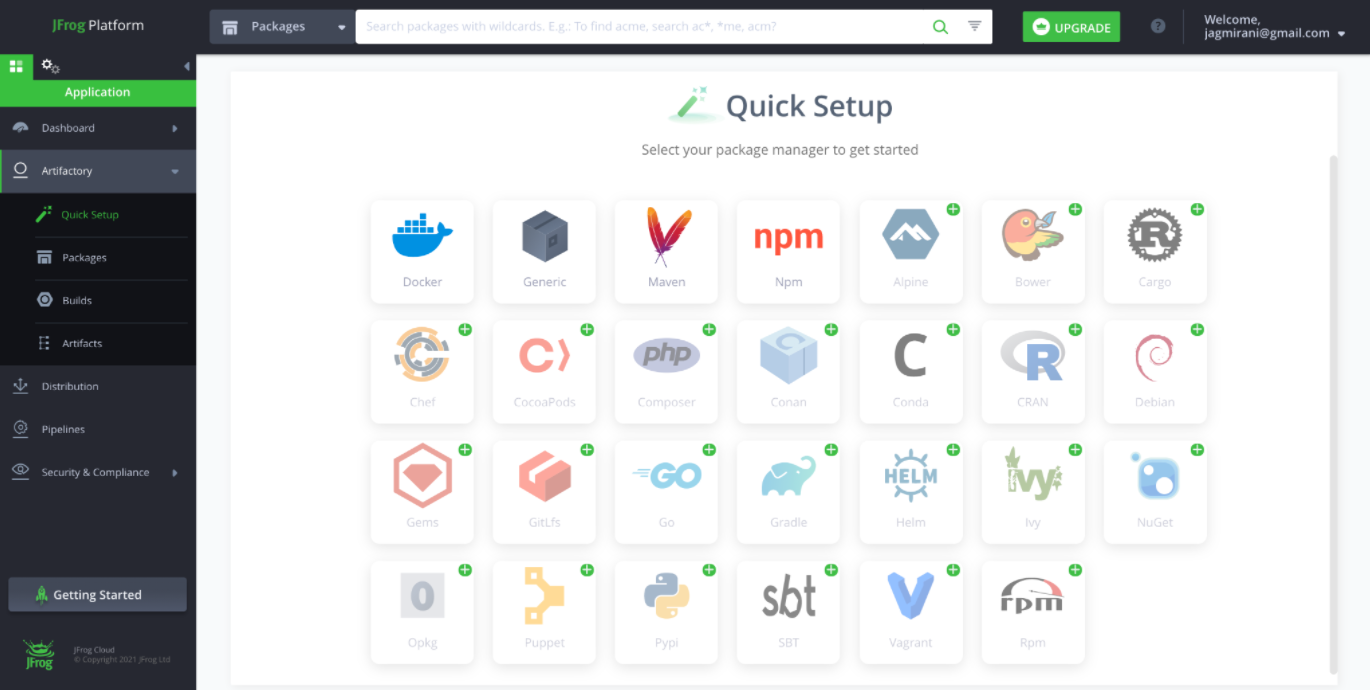
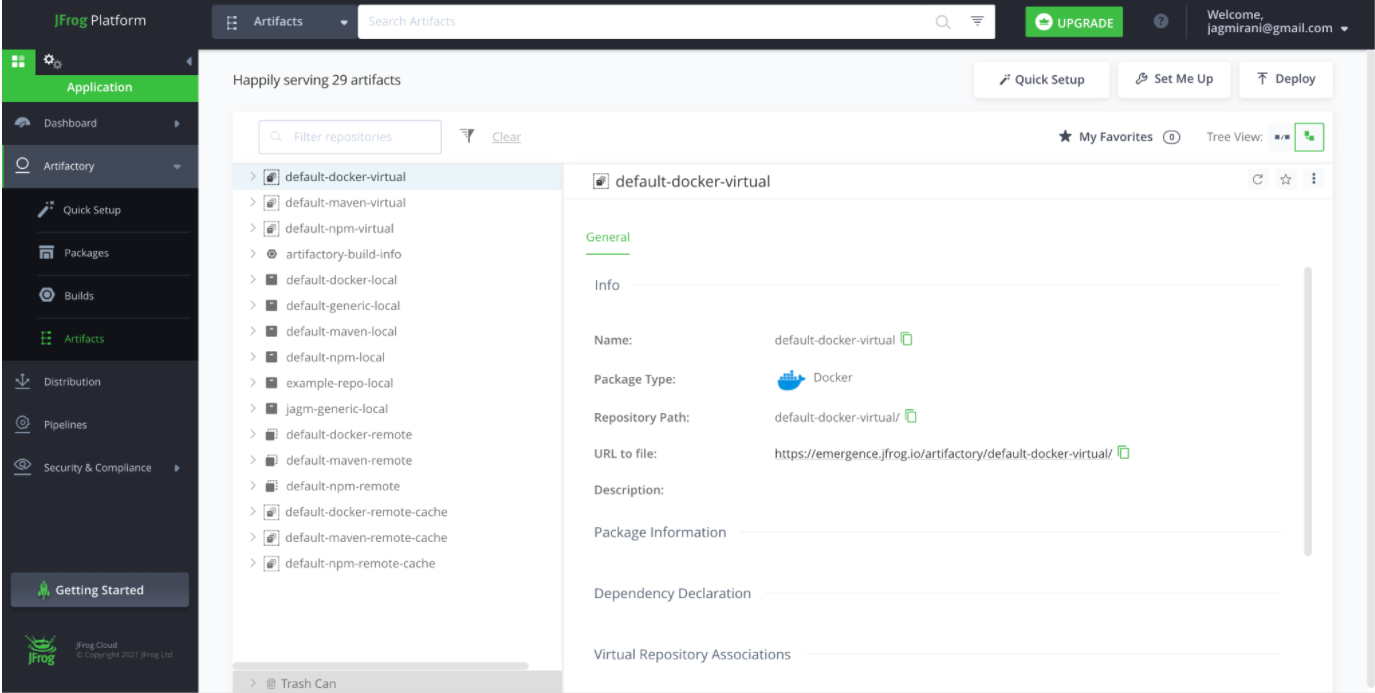
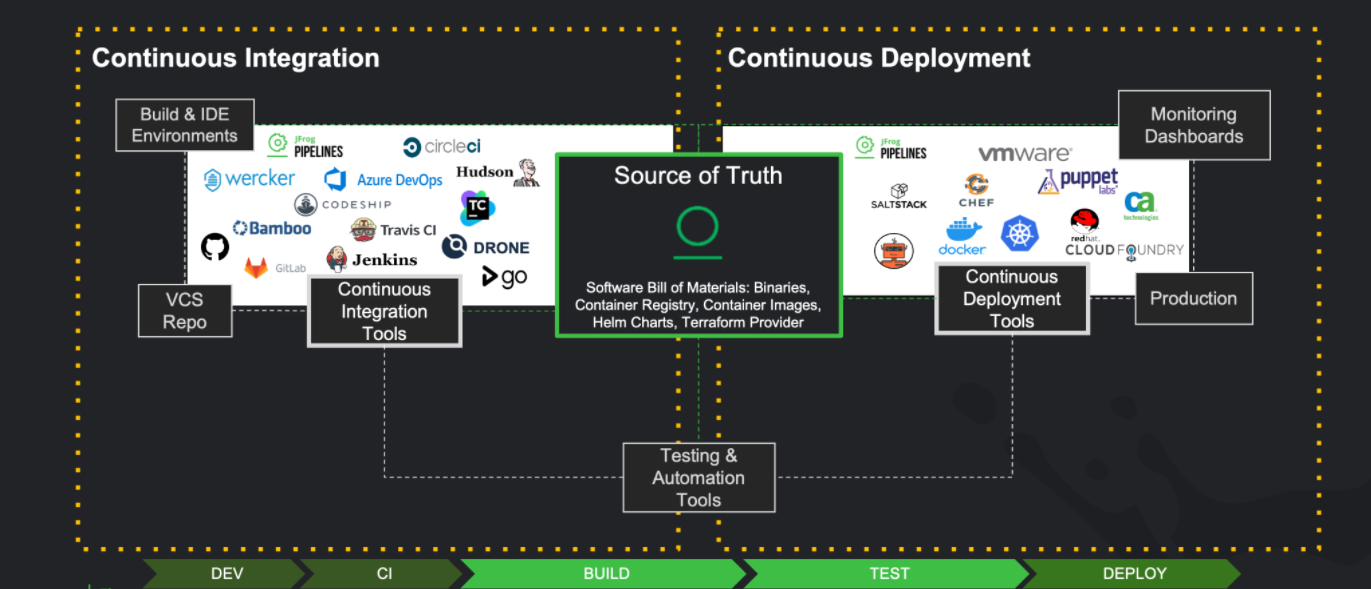
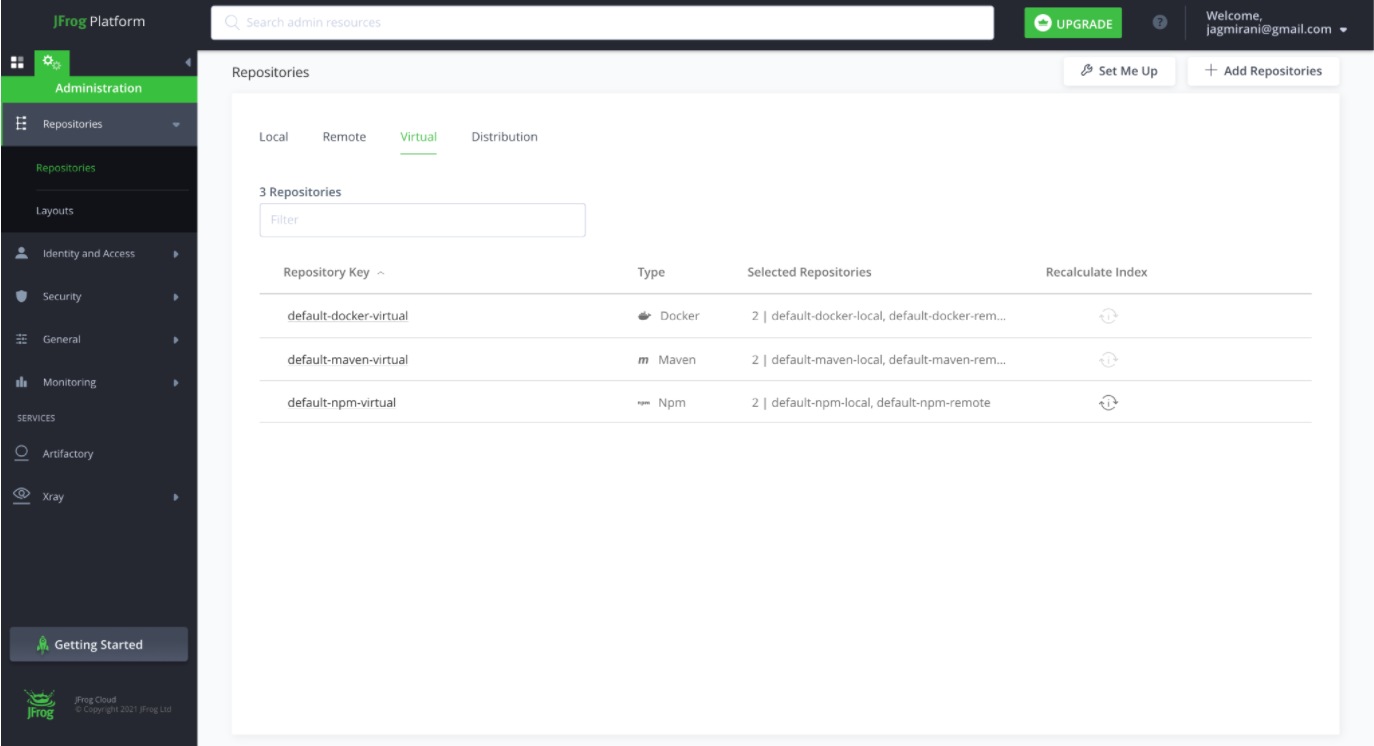
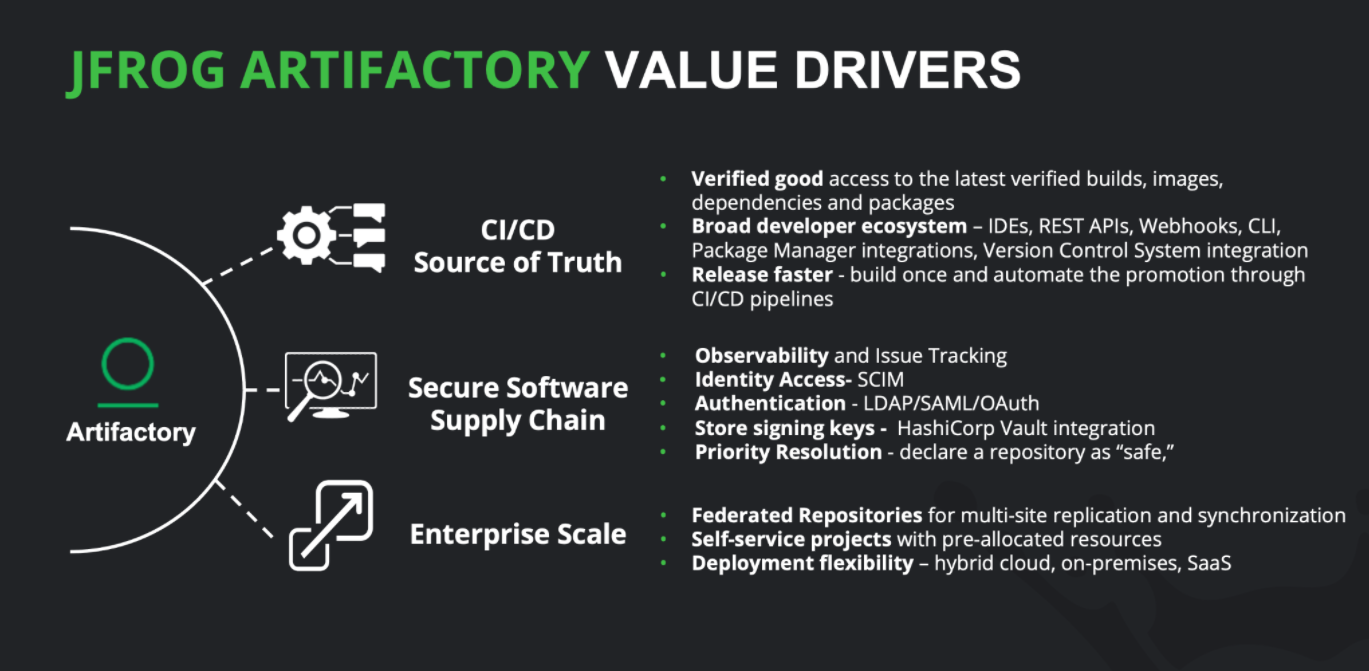
Artifactory Features
Artifactory Integrations




Customer Reviews
See why people love Artifactory

KRITESH S.
Verified UserComputer Software · 10000+ employees
Fast repository manager with universal integration capabilities.
JFrog Artifactory is our internal build deployment repository. It's sophisticated & able to handle large data flows easily. It also supports next-gen CI/CD pipelines which is an added bonus!
- Integration of Artifactory with other CI/CD tool is quite easy
- Artifactory facilitates our internal deployments when there are new dependencies
- It can also be configured as a mirror repository for public packages
- Artifactory integrates with most DevOps tools
- It has built-in directives for creating & releasing builds, artifacts & pipelines
- Setting up protected repositories is quite challenging
- UI responsiveness still needs much improvement
- Recovery process is a bit time taking even for experts
Gil B.
Verified UserElectrical/ Electronic Manufacturing · 5001-10000 employees
The Best Binary Repository
It's very intuative and a standard of binary repositories, the basic verion supports all packages and Jenkins and other tools. Highly recommended!
- We use the WebDAV shares functionality to our source control so when a developer commits/delivers code and binary to the source control (RTC) it moves the binaries to Artifactory so it keeps the source control safe from binaries
- I also like the support for all types of packages including Conan C/C++ packages
- It has a connector to almost anything including Jenkins, Docker, K8S, etc
The free/open source version lacks functionality comparing to it competitors such as supporting comiting more than one file and some packages support
Switched From
The pricing gets exponential in Nexus and Artifactory pricing is not per user as Nexus is.
Why they chose it
"Pricing module of Nexus is per user while it is unlimited users for Artifactory"
Daniel S.
Verified UserEntertainment · 201-500 employees
Perhaps Not Needed, But Interesting?
Cool graphics, easy to understand, but ultimately not needed.
- I'll admit that I've been very intrigued by the fancy digital mapping used in JFrog's general interface, and especially so in Artifactory
- Cool graphics let me know exactly what all my information is doing or going, and is intended to provide clarity
- The software provides so much clarity that I'm not actually sure if I need it
- Seriously, it's a cool product, but the features are so automatically included in other products that we already use
- it seems like an unnecessary add-on
marc l.
Verified UserAutomotive · 51-200 employees
Software engineer
Verified reviewer
- Great tool for managing and distributing binaries and software artifacts
- From my use case i dont see a glaring con
- Overall, a great product
Verified Professional
Computer & Network Security · 10000+ employees
Securely store and scan all your container artifacts with Artifactory!
We are using artifactory for storing all our container images and even gold standard images are well. We have different repo's for different use cases and IAM is built on top of artifactory to restrict access to sensitive images. X-Ray scan is also used in our CI/CD pipelines to make sure secure and quality images are being developed.
- 1
- X-Ray scanning: scans your container images which are stored on Artifactory and then publish results for the developers use
- Admins can build policies to restrict allowance of vulnerable images and set thresholds
- 2
- Categories for repositories can be built: Local vs remote vs virtual repos can be created which is very usful
- You can even onboard remote repos on your central artifactory instance and also create virtual repos which include both local and remote
- GUI for artifactory is not that great
- One can simply get lost in tons of options and strugle to find the right menus
- This increases the learning curve for the application which is frustrating at times
- However, great documentation is available on vendor's website which helps a lot to find solutions

Sachin S.
Verified UserComputer Software · 10000+ employees
Artifacts management become easy
As a Devops team we are offering JFrog Artifactory to developers where they can store their dependencies, packages, binaries, images and etc. We have integrated it with CI/CD tools such as Jenkins, Azure DevOps made a service connection between these so whenever a pipeline got executed it can retrieve and upload artifacts. Hence, we are able to manage all the artifacts at a single universal location. All of these features reduced our work very much.
- Artifactory makes easy to manage artifacts, binaries and containers at a single universal location
- It is very crucial parts of devOps
- Managing artifacts becomes challenging when we grow
- It supports mostly all sort of packages such as maven, gradle
- While running CI/CD pipelines we are making a call to a the repository where all the dependent packages are stored
- With REST API we can retrieve and upload the packages as well about logging into the UI
- Cross region replication is easily implemented
- Nothing major I can think of
- But, there is one part where I can think improvement can be done while uploading any package manually there's numerous values which which need to fill in until unless it's a non-generic package
Verified Professional
11-50 employees
A good companion for Java software crafters
11-50 employees
- Any software company, after a while, has its own internal tools that you can't keep copying to each new project
- Also, any Continuous Integration/Deployment system needs a repository for the artifacts
- Artifactory serves perfectly to these needs
- The web UI is simple enough, with a nice search engine, good integration with main CI servers and a REST API
- Maven support is available in the OOS version and many other packages are supported in the Pro one (eg
- NPM, Docker)
- If you're behind a corporate proxy you'll love the repository mirroring to limit the hassle with IT
- Available on-premise and as cloud service
- Upgrade is easy
- It mostly works transparently, but be careful if you're behind a too strict proxy: recently our client's IT security decided that many JARs from Maven Central were dangerous, redirecting to a "forbidden" page
- We soon ended up with the repository full of JARs actually containing that page
- It took a while to figure out, so remember to keep the MD5 check enabled
- Sometimes it seems that Artifactory starts leaking memory and we need to restart it
- The Pro version is not really cheap
Verified Professional
Information Technology and Services · 10000+ employees
Secure place to store Artifacts
We use antifactory for many activities, -Jenkins CICD pipe. Where Deployment artifacts xml configuration are store with versioning. -Documents store
-Integration capability which supports DevOps CICD Jenkin pipe lines -Store artifacts and permission control -layout is good , drag & drop to upload file, copy file name/ full file path link options
- Frequently log you out and had to login every time
- May be a secure feature but it really make you loose you patience
Verified Professional
Information Technology and Services · 10000+ employees
Great tool for Build Artifact management
Overall I am happy with the tool, and use it on daily basis for build Artifact management via CICD pipelines in Jenkins.
Container registry, vagrant repository, rich API, OOB integration with Jenkins for CI/CD, Role based access control, virtual repositories concept
- Reporting and Analytics is a weak point
- Also vulnerabilities scanning is not available by default and you need to purchase XRAY which is a separate product
- Ideally they should integrate the both into 1 tool
Christopher S.
Verified UserDefense & Space · 10000+ employees
A vital component to any continuous integration pipeline
Artifactory has been a drastic improvement over SAMBA shares and network drives. Its ability to filter artifacts makes our continuous integration pipelines more efficient by eliminating the need to build binaries that we store in Artifactory.
Provides a very scalable file system for storing build artifacts yielded by a continuous integration pipeline
- You can only store one SSH key for authentication in Artifactory
- This causes many headaches for my team who typically have different SSH keys for authenticating from different networks
Switched From
SAMBA shares didn't offer the power to intelligibly search through artifacts without complicated shell filtering commands.
See what companies are saying about Software Advice
This is very useful service. The company presents itself in a very professional manner.
Subscription Successful!
You've been added to our newsletter.
Write a Review
Share your experience to help others make better decisions.